A vertical Z axis starts with safety risk
When a vertical Z axis ball screw is used in CNC, automated lifting, inspection equipment or press mechanisms, the load direction and gravity affect safety directly. The RFQ should state whether a drop risk exists, and whether there is a motor brake, air balance, or mechanical lock.
One hard fact comes first: a ball screw does not self-lock. Whether the axis holds after a power cut depends on a brake, a counterweight or a mechanical lock, not on the lead. The lead only changes the torque needed to hold.
Load includes more than the workpiece weight
The load includes the slide, spindle, fixture, workpiece, and every moving part, plus acceleration, stop state, and shock. On a vertical axis, safety factor and thrust margin are more sensitive than on a horizontal one.
Reporting "5 kg workpiece" is not enough: what presses on the screw is the whole moving assembly, often several times the workpiece.
Work the thrust margin once
Vertical selection needs four steps and no complex model:
| Step | Calculation | Example |
|---|---|---|
| 1. Total vertical load | Slide + spindle + fixture + workpiece | 50 kg |
| 2. Convert to weight | m × 9.81 | ≈ 490 N |
| 3. Apply safety factor (say 2) | 490 × 2 | ≈ 980 N |
| 4. Compare available thrust | F = 2π × efficiency × torque ÷ lead | 5 mm lead at 1 N·m ≈ 1130 N ✓; 10 mm lead ≈ 565 N ✗ |
This table is why the same motor "holds" or "does not hold" on a vertical axis purely by lead. Acceleration adds on top. Another 0.5 g raises the requirement by half again.
A larger lead is not automatically better
A larger lead gives more speed but changes thrust margin, resolution and holding capability. For a vertical Z axis, choose lead against target speed, positioning accuracy, brake method and motor torque, not speed alone. For how grade balances cost on a Z axis, see C7 vs C5 ball screw selection.
Brake and drop risk belong in the RFQ
If the axis could drop on power loss, emergency stop or a servo alarm, describe the control strategy and mechanical protection in the RFQ. Only then can the selection allow for a smaller lead, a larger diameter, a preloaded nut or a stiffer support structure.
One common misunderstanding: preload does not stop a drop. Preload raises stiffness and removes clearance, but it provides no braking force. Whether a brake is needed is a safety question, not an accuracy question.
End machining and support span need confirming too
A Z axis is usually tight on space, so the fixed side, support side, coupling end and bearing seat dimensions have to be clear. Support span, stroke and mounting direction affect rigidity, critical speed and running stability.
Application decision table
| Vertical Z axis question | What to confirm | Why it matters |
|---|---|---|
| Will the axis hold position? | Brake, motor holding torque, lead | Reduces drop risk when power is off. |
| Is thrust enough? | Load, acceleration, duty, safety factor | Confirms thrust margin and screw size. |
| Is speed realistic? | Lead, motor speed, travel | Avoids choosing too large a lead. |
| Is assembly safe? | Support unit, nut style, end machining | Keeps fixed side and coupling fit stable. |
RFQ checklist
- Vertical Z axis load, moving mass, stroke, speed target, and cycle time.
- Lead choice, thrust margin, safety factor, brake type, and drop risk concern.
- Motor type, coupling, support unit, nut style, accuracy, and backlash requirement.
- End machining drawing, installation space, quantity, packing, and delivery target.
- Note whether the application is CNC, router, lifting, packaging, or automation equipment.
Send us your Z axis load case
Send weimute the load, travel, speed, brake plan, and support unit information. Our manufacturing and sales team will review whether the lead and screw size leave enough thrust margin and safety factor before quoting.
FAQ
Can I choose a larger lead for faster Z movement? Only after checking brake, load, thrust margin, and drop risk. If step 4 in the table above does not pass, the larger lead is not available.
Does a vertical axis always need a brake? Many vertical axes need a brake or other holding method, but the final choice depends on load, lead, motor, and safety requirement. It has to be calculated, not assumed.
Does a preloaded nut keep a Z axis from dropping? No. Preload is a stiffness and clearance measure; holding position is a braking measure, and neither replaces the other.
Next step
Turn this guide into an RFQ
When the specification direction is clear, send the details below together with quantity, lead time, and packing requirements.
Include these details
- Model, diameter, lead, accuracy grade, or target application.
- Load, speed, travel, mounting method, and matching rail or support-unit needs.
- Quantity, lead time, packing, and whether inspection records or shipment photos are needed.
Category
Related Technical Guides
Continue with similar buyer questions
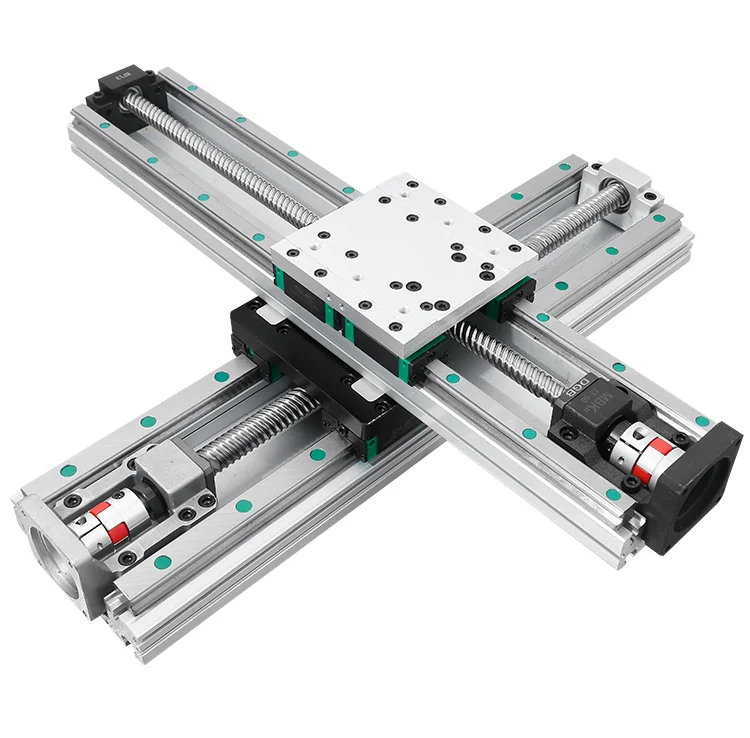
Linear Module Basics: Stroke, Load, Speed, and Accuracy Explained
State stroke, load, speed, cycle time, and accuracy together when selecting a linear module and requesting a quote.
Send linear module parameters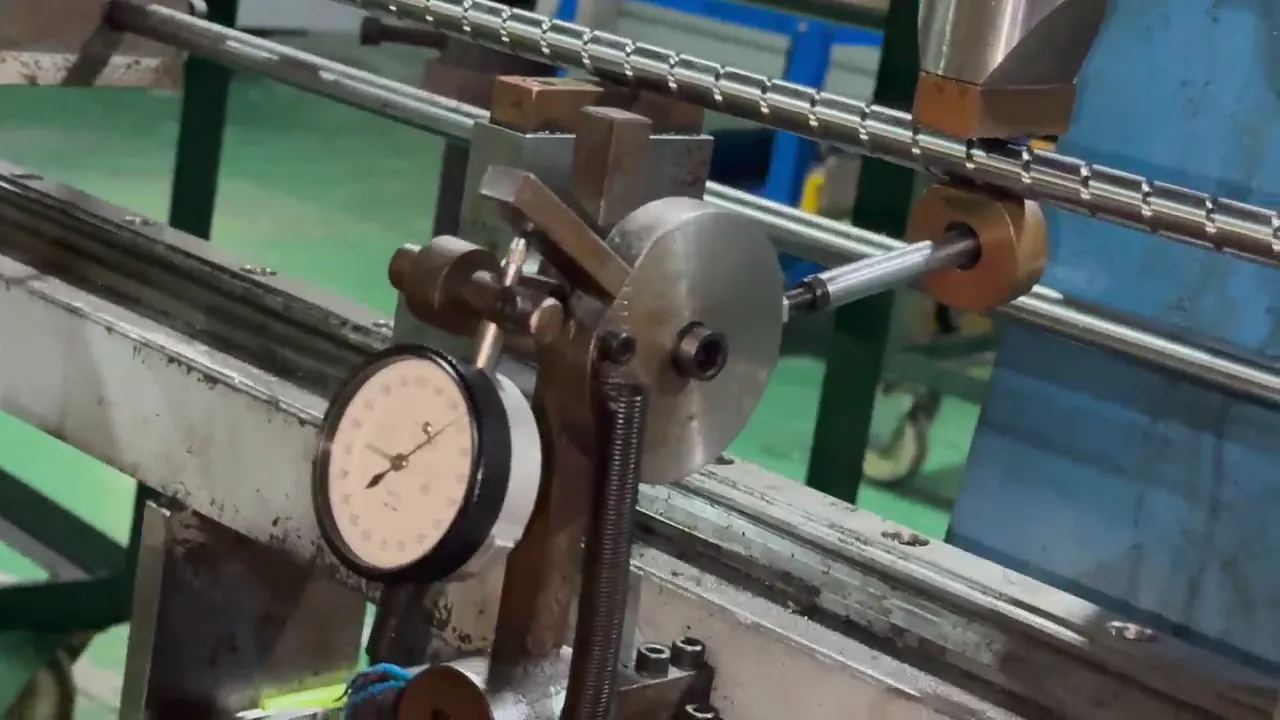
C5 vs C7 Ball Screw: Accuracy, Cost, and Buyer Selection
C7 and C5 differ in accumulated lead error, process, and lead time, not in being better or worse. Judge by the axis: most machines run C7, key axes need C5.
Send accuracy requirements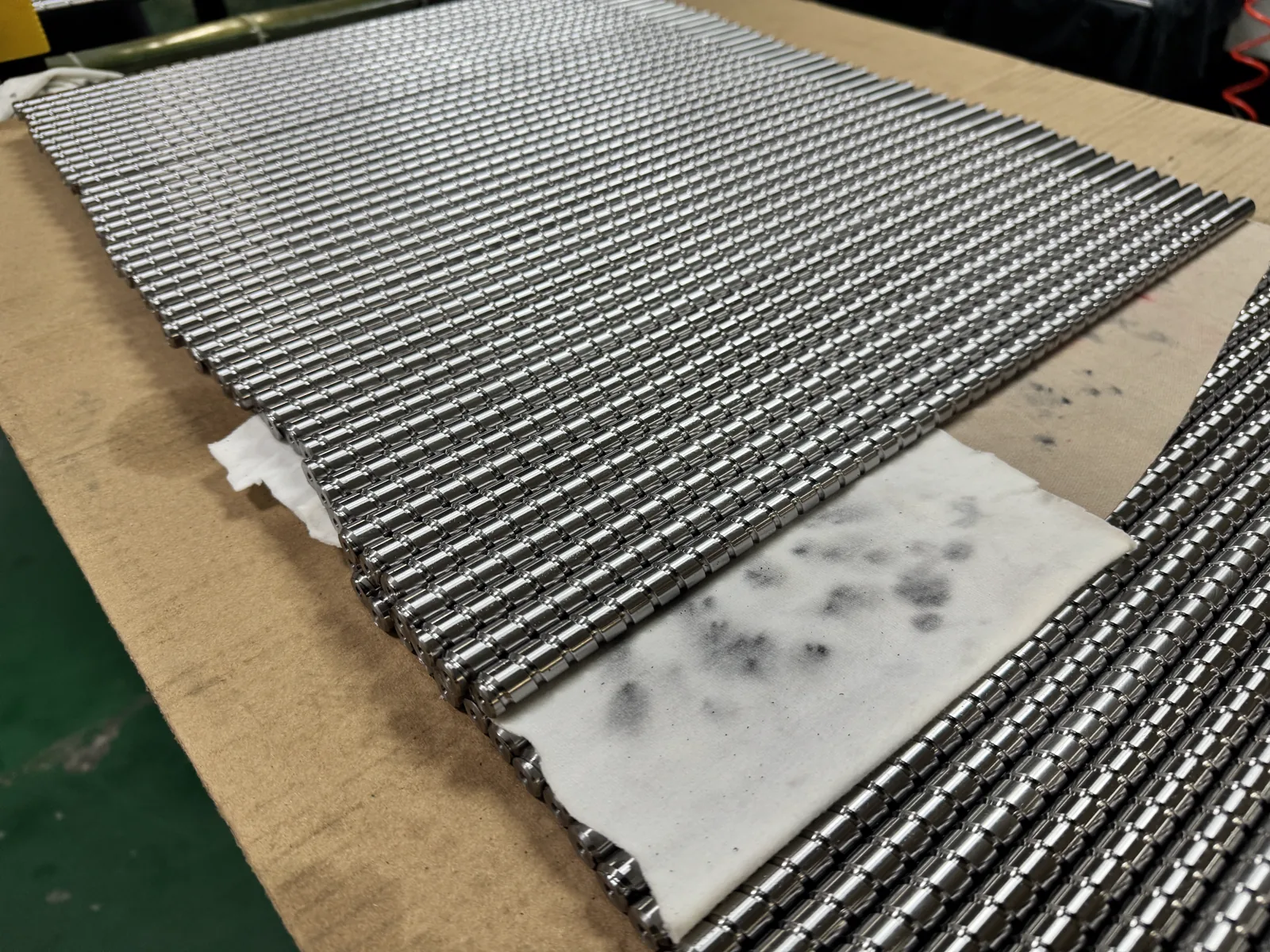
2005 vs 2010 Ball Screw: Lead, Speed, and Load Guide
Explain how 5 mm and 10 mm lead on a 20 mm ball screw affect speed, torque, load, and machine fit.
Send 2005/2010 requirements